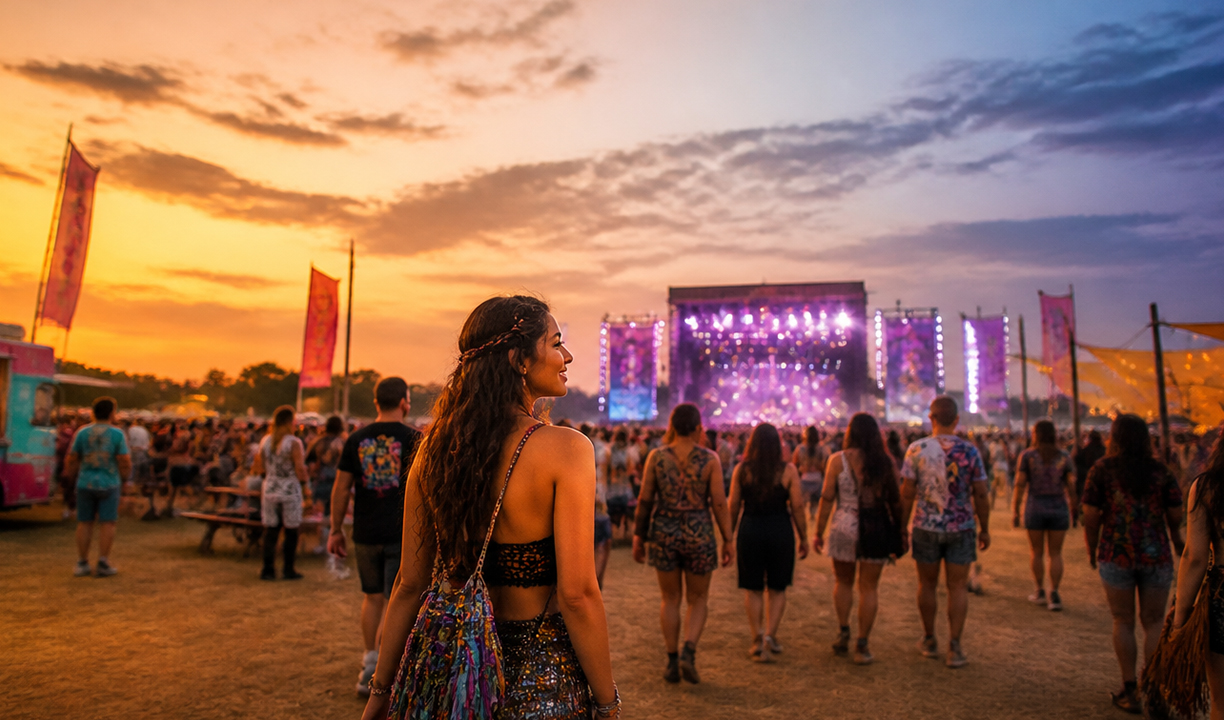
First-Time at a Music Festival in India? Your Complete 2026 Survival Guide

If this is your first Indian music festival, here is the short answer: pack light but smart, book your ticket and travel weeks in advance, carry a physical ID and a digital one, hydrate more than feels necessary, and expect a mix of chaos and joy that rarely runs on a fixed schedule. Everything below expands on that, section by section, so you walk in prepared instead of overwhelmed.
India's festival scene has grown into something genuinely diverse. You will find electronic music gatherings in Goa and Rajasthan, indie and rock festivals in Bengaluru and Pune, folk and heritage festivals in the desert towns of Rajasthan, and massive multi-genre lineups in Delhi NCR and Mumbai. Each one has its own personality, and understanding that variety is the first step to choosing the right one for your first outing.
Understanding the Indian Festival Landscape
Music festivals in India are not a single category. A desert festival built around Rajasthani folk and Sufi traditions feels worlds apart from an electronic dance music event on a Goan beach, even though both fall under the broad umbrella of "music festival." Knowing this distinction matters because it shapes everything from what you pack to how you plan your day.
Most large festivals run between October and March, when the weather across most of the country is dry and manageable. A few beach and hill festivals extend into the early monsoon shoulder months, but as a first timer, sticking to the winter and early spring season is the safer bet. Temperatures are cooler, rain is less likely, and the overall experience tends to be smoother.
Scale also varies enormously. Some festivals draw a few thousand attendees over a single day, while others stretch across multiple days and host tens of thousands of people across several stages. Bigger does not automatically mean better for a first timer. A mid-sized festival often gives you a gentler introduction to crowd density, queue times, and campsite logistics before you attempt something larger.
Choosing the Right First Festival
Think about three things before you commit: the music genre you actually enjoy, whether you want a single day or a multi-day camping experience, and how far you are willing to travel. A festival lineup that excites you on paper will still feel like a slog if the genre is not your taste and you are stuck there for three days.
Day festivals are a gentler entry point. You show up, enjoy the music, and go home to your own bed. Multi-day camping festivals ask more of you logistically, tents, sleeping bags, communal bathrooms, and a schedule that runs late into the night, but they also tend to build the strongest sense of community. If you are unsure, a single-day festival close to a city you already know is the lowest-risk way to test whether the festival lifestyle suits you.
Location matters just as much. A beach festival in Goa carries very different packing and safety considerations compared to a desert festival in Rajasthan or a hill station event in the Himalayan foothills. Altitude, humidity, and terrain all affect how your body handles a long day of standing, dancing, and sun exposure.
Booking Tickets and Planning Ahead
Ticket prices for Indian festivals typically follow a tiered release model, with early bird passes priced noticeably lower than gate prices closer to the event date. Booking as early as you can is one of the simplest ways to save money and guarantee entry to festivals with limited capacity.
Always verify that you are buying through the festival's official website or an authorized ticketing partner. Resale tickets circulating on social media or messaging apps close to the event date are a common source of fraud, since fake QR codes are easy to generate and hard to spot until you are standing at the gate.
Alongside your ticket, plan your travel and accommodation early too. Popular festival weekends push up hotel and flight prices in the host city, and camping spots at multi-day events often sell out separately from the festival pass itself. If the festival is in a smaller town, local accommodation can fill up months in advance, so treat travel booking with the same urgency as the ticket itself.
Planning Task | When to Do It |
|---|---|
Buy festival ticket | 2 to 3 months before, during early bird window |
Book flights or train tickets | As soon as dates are confirmed |
Reserve accommodation or camping spot | 6 to 8 weeks before |
Check weather forecast for the region | 1 week before |
Download offline maps and festival app | 2 to 3 days before |
What to Pack for an Indian Festival
Packing for an Indian festival means balancing comfort, practicality, and the reality that you will likely be walking, standing, and dancing for hours in variable weather. Overpacking is a common first-timer mistake, since most festival grounds do not offer much storage, and carrying a heavy bag through crowds gets exhausting fast.
Breathable clothing is essential, especially cotton or linen layers that you can add or remove as temperatures shift between afternoon heat and cooler nights. Comfortable, broken-in footwear matters more than fashion here, since festival grounds are often uneven, dusty, or grassy, and blisters can ruin an otherwise great day.
Category | Essentials |
|---|---|
Clothing | Breathable layers, a light jacket for night, comfortable closed shoes |
Health | Sunscreen, reusable water bottle, basic first aid, any personal medication |
Documents | Physical government ID, digital ticket copy, printed backup if possible |
Tech | Portable power bank, offline map download, earplugs for hearing protection |
Comfort | Small backpack, bandana or cap, wet wipes, cash in small denominations |
Earplugs deserve a special mention because they are one of the most overlooked festival essentials. Standing near large speaker stacks for hours at a time can cause real hearing fatigue, and a simple pair of foam or musician's earplugs protects your ears without dulling the music experience in any noticeable way.
What to Expect Once You Arrive
Festival grounds in India are typically organized around multiple stages, food and beverage zones, merchandise stalls, and designated rest areas. Entry lines can move slowly, particularly during peak arrival windows in the late afternoon, so arriving a little earlier than the gates open often saves you from the longest queue of the day.
Security checks are standard at every major festival, and they usually include a bag check and a metal detector pass. Prohibited items generally include outside food and drink, glass containers, professional camera equipment without prior accreditation, and any weapons or sharp objects. Checking the specific festival's guidelines beforehand avoids the frustration of having something confiscated at the gate.
Schedules at Indian festivals tend to run with a degree of flexibility. Set times printed in the lineup are a strong guide, but delays of fifteen to thirty minutes are common, especially later in the evening. Building a little slack into your own personal schedule, rather than sprinting between stages to catch an exact set time, makes for a more relaxed day overall.
Staying Safe and Healthy
Hydration is the single most important health habit at an Indian festival, particularly at daytime events where sun exposure is constant. Most festivals allow empty reusable bottles that you can refill at designated water stations, so carrying one in rather than relying entirely on purchased water both saves money and keeps you drinking consistently throughout the day.
Sun protection matters just as much as hydration. Reapplying sunscreen every few hours, wearing a hat or cap, and seeking shade during the hottest part of the afternoon all reduce the risk of heat exhaustion, which is one of the more common medical issues at outdoor daytime festivals.
Crowd safety is worth thinking through consciously, especially near the front of large stages where the crush of bodies can intensify during popular sets. If you feel physically uncomfortable in a dense crowd, moving toward the edges rather than pushing further in is almost always the safer choice. Most well-organized festivals station medical tents at visible points across the grounds, so it helps to note their location early in the day rather than searching for one in an emergency.
For solo travelers, and particularly for women attending alone, sharing your live location with a trusted contact, agreeing on a check-in time, and identifying the nearest exit and help desk on arrival are simple habits that add a real layer of security without taking away from the enjoyment of the day.
Money, Connectivity, and Everyday Logistics
Most Indian festivals now run on a cashless system inside the venue, where you load money onto an RFID wristband or a festival app and use that for food, drinks, and merchandise. Understanding this system before you arrive saves confusion at the gate, since you will usually need to top up your wristband at a designated counter rather than paying vendors directly with cash or card.
That said, carrying a small amount of physical cash is still a good backup, particularly for local transport, small vendors just outside the venue, or situations where digital payment systems experience the temporary outages that can happen with heavy network load in a crowded area.
Mobile network congestion is common at large festivals, since thousands of phones connecting to the same towers simultaneously can slow down or drop data speeds. Downloading offline maps, saving your ticket as a screenshot in addition to the app version, and telling a friend or family member your general plan before you lose reliable signal are all small precautions that prevent bigger headaches later.
Festival Etiquette and Respecting the Space
Many Indian festivals have adopted strong sustainability commitments, including bans on single-use plastic and designated waste sorting stations. Bringing your own reusable bottle and being mindful of where you dispose of trash is both a practical habit and a way of respecting the environmental efforts many organizers now prioritize.
Respect also extends to the people around you. Festival crowds bring together strangers from very different backgrounds, and simple courtesies, giving people personal space, asking before taking photos of someone, and being mindful of noise if you are near a campsite at night, go a long way toward keeping the shared experience enjoyable for everyone.
After the Festival
The days immediately after a multi-day festival are often underestimated. Sleep debt, sun exposure, and constant standing add up, and giving yourself a genuine recovery day before returning to normal responsibilities makes the comedown far easier. Rehydrating well, eating properly, and catching up on rest are simple steps that help your body reset after an intense few days.
Your first festival will teach you more about your own preferences than any guide can. Some people discover they love the marathon energy of a multi-day camping festival, while others realize a single well-planned day is exactly their pace. Either way, that self-knowledge is what makes every festival after your first one easier to plan and more enjoyable to attend.
Quick Reference Summary
Book tickets early through official channels only, ideally during the early bird window.
Choose your first festival based on genre, duration, and travel distance rather than size alone.
Pack light, breathable layers, comfortable shoes, sunscreen, a reusable bottle, and earplugs.
Carry both a physical ID and a digital ticket copy, plus a small amount of cash as backup.
Prioritize hydration and sun protection throughout the day.
Understand the cashless RFID or app payment system before arrival.
Download offline maps in case of network congestion.
Respect sustainability rules and fellow attendees' personal space.
Plan for a recovery day after the festival ends.
Key Definitions
RFID wristband: A cashless payment band linked to a prepaid balance, used at many festivals instead of cash or card for on-site purchases.
Early bird ticket: A discounted ticket tier released first, priced lower than tickets sold closer to the event date.
General admission (GA): The standard ticket tier granting entry to the festival grounds without premium viewing or lounge access.
Multi-day camping festival: A festival format where attendees stay on-site in tents or designated camping areas across several days.
Related Concepts at a Glance
Festival genre and format shape packing, safety, and travel decisions.
Ticket tier affects both price and the urgency of early booking.
Weather season influences clothing, hydration needs, and overall comfort.
Payment system (cashless RFID or app) determines how you budget on-site spending.
Crowd density and stage placement influence personal safety choices.
Frequently Asked Questions
What is the best time of year for a first music festival in India?
The October through March window offers the most reliable weather for most regions, with cooler temperatures and lower chances of rain.
Do I need cash at a cashless festival?
Yes, a small amount as backup is wise, since network issues or off-venue vendors may not accept digital payment.
Is it safe to attend an Indian music festival alone?
Many people attend solo safely. Sharing your location with a trusted contact, noting the medical tent and help desk locations, and staying near the edges of dense crowds are practical precautions.
How early should I book my ticket?
Booking during the early bird phase, typically two to three months ahead, secures the best price and guarantees entry to festivals with limited capacity.
What should I avoid packing?
Avoid glass containers, outside food and drink, and heavy or valuable items you are not prepared to carry all day, since storage options on festival grounds are usually limited.


